

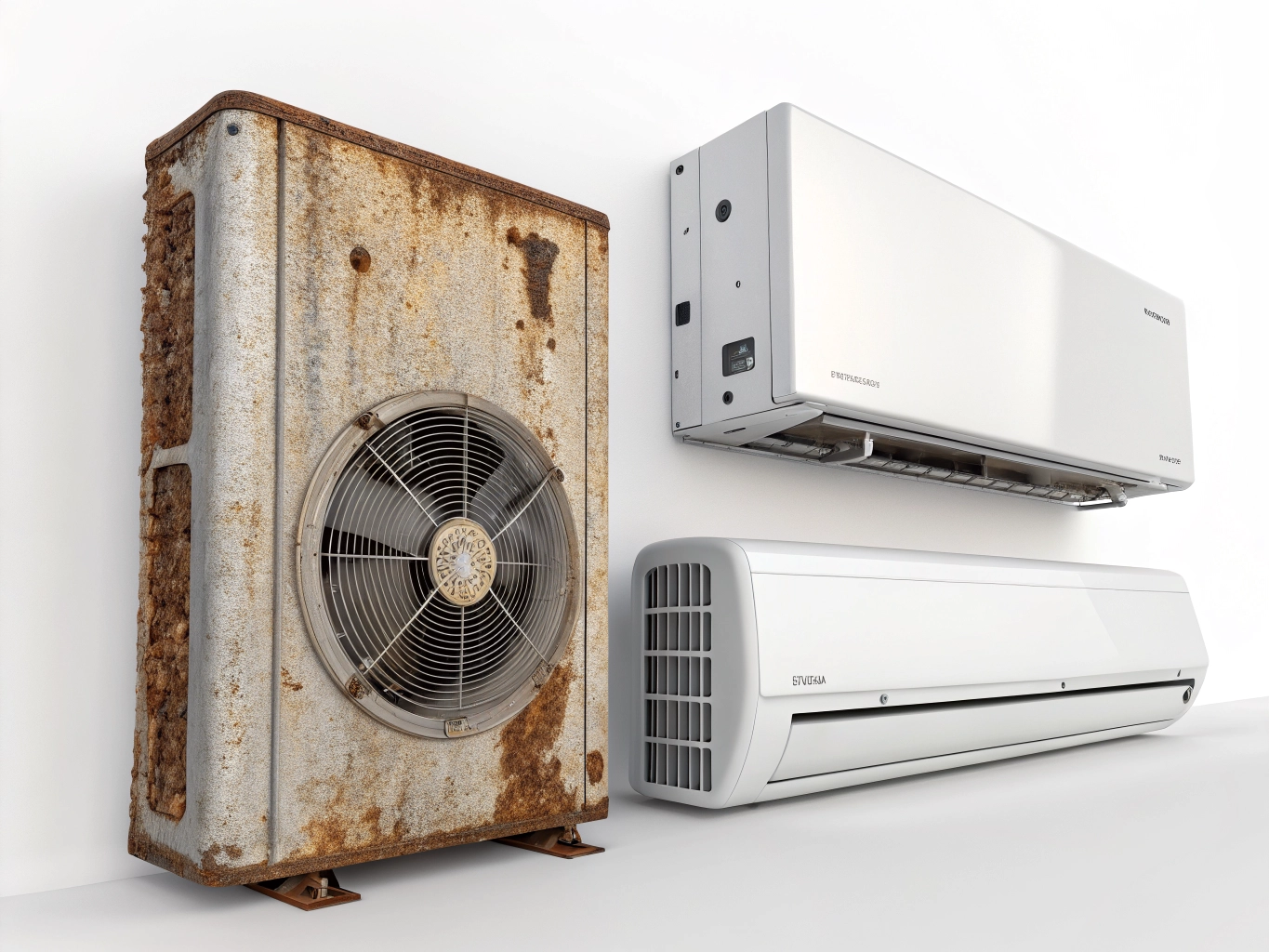
At some point, every aircon owner faces the same question: is it worth repairing again, or should I just replace the unit? This guide covers typical aircon lifespans in Malaysia’s climate, the signs that point toward replacement rather than another repair, and how to think through the cost comparison when you’re on the fence.
Typical Aircon Lifespan in Malaysia
Most residential air conditioning units last between 8 to 12 years with regular maintenance, though this varies based on usage and system type:
- Wall mounted units: typically 8–10 years with regular servicing
- Ceiling cassette / ducted systems: often 10–15 years given their generally more robust build and commercial-grade components
- Commercial systems (VRV/VRF, chilled water, AHU): can last 15–20 years with proper maintenance contracts, though major components may need replacement partway through that lifespan
Malaysia’s constant heat and humidity mean local units often work harder year-round than in more temperate climates, which can shorten lifespan slightly compared to manufacturer estimates based on more moderate usage patterns.
Signs Your Aircon Is Nearing the End of Its Life
1. Repairs Are Becoming Frequent
If you’ve called for repair two or three times in the past year, the unit is likely wearing out across multiple components rather than suffering from one isolated issue. At this point, repairs are treating symptoms rather than the underlying age of the system.
2. The Unit Uses an Outdated Refrigerant Type
Older units using R22 refrigerant (being phased out globally) can become increasingly expensive to service, since the refrigerant itself is harder to source and more costly than modern alternatives like R410A or R32.
3. Rising Electricity Bills Despite Normal Maintenance
Even with regular cleaning and servicing, ageing components lose efficiency. If your bills are climbing year over year despite consistent maintenance and unchanged usage habits, the unit’s internal components are likely degrading.
4. Inconsistent Cooling Across the Space
A unit that used to cool evenly but now leaves parts of the room noticeably warmer often has a fan, compressor, or airflow issue tied to general wear rather than a single fixable fault.
5. Repair Costs Approaching Replacement Cost
This is the most direct signal. If a technician quotes a compressor replacement or major repair that costs 40–50% or more of a new unit’s price, replacement is usually the better long-term investment, since you’d be paying premium repair costs for a unit that’s still ageing overall.
The 50% Rule of Thumb
A commonly used guideline: if the repair cost exceeds roughly half the price of a comparable new unit, and the current unit is already past the midpoint of its expected lifespan, replacement typically makes more financial sense than continuing to repair.
Repair or Replace: A Practical Comparison
| Factor | Favours Repair | Favours Replacement |
|---|---|---|
| Unit age | Under 6–7 years | Over 8–10 years |
| Repair frequency | First issue in years | Multiple repairs in the past year |
| Repair cost | Under 30% of new unit cost | Over 40–50% of new unit cost |
| Refrigerant type | Modern (R410A, R32) | Outdated (R22) |
| Energy bills | Stable | Rising steadily |
Benefits of Replacing an Old Unit
Beyond avoiding repeated repair costs, newer units typically offer:
- Better energy efficiency, often reducing electricity consumption noticeably compared to units over a decade old
- Quieter operation, thanks to improvements in compressor and fan design
- Inverter technology, which adjusts cooling output more precisely instead of constantly switching on and off, reducing wear and energy use
- Better refrigerant options, avoiding the sourcing and cost issues tied to older refrigerant types
What to Do If You’re Not Sure
If you’re uncertain whether your current issue is worth repairing, get an honest diagnosis first. A good technician should tell you plainly whether a repair makes sense or whether you’re better off starting fresh — not just push for the most immediate paid job. See our aircon repair service for a proper diagnosis before deciding either way.
Frequently Asked Questions
Does regular maintenance actually extend an aircon’s lifespan? Yes, significantly. Units that receive regular cleaning and maintenance tend to reach the higher end of their expected lifespan, while neglected units often fail years earlier.
Is it cheaper to repair an old unit than buy a new one? For minor issues, yes. But once a unit needs frequent repairs or a major component replacement, the cumulative repair costs often exceed what a new, more efficient unit would have cost over the same period.
How do I know if my aircon uses R22 refrigerant? This is usually specified on the unit’s nameplate or in its manual. If your unit is more than 10–12 years old, there’s a reasonable chance it uses R22, which is increasingly costly to service.
Is a new aircon really more energy-efficient, or is that just marketing? Genuinely more efficient in most cases — improvements in compressor technology and inverter systems over the past decade have meaningfully reduced energy consumption for the same cooling output, particularly compared to units over 10 years old.
Should I replace all my units at once or one at a time? This depends on your budget and how uniformly aged your units are. If they were all installed around the same time, they’ll likely reach end-of-life together, so budgeting for a phased replacement is a reasonable approach.
Get an Honest Repair or Replace Assessment
Not sure if your unit is worth repairing again? We’ll give you a straightforward diagnosis and recommendation, not just an upsell. Message us on WhatsApp for an assessment, call +60 10-593 0730, or browse our full range of services for repair and installation options.