

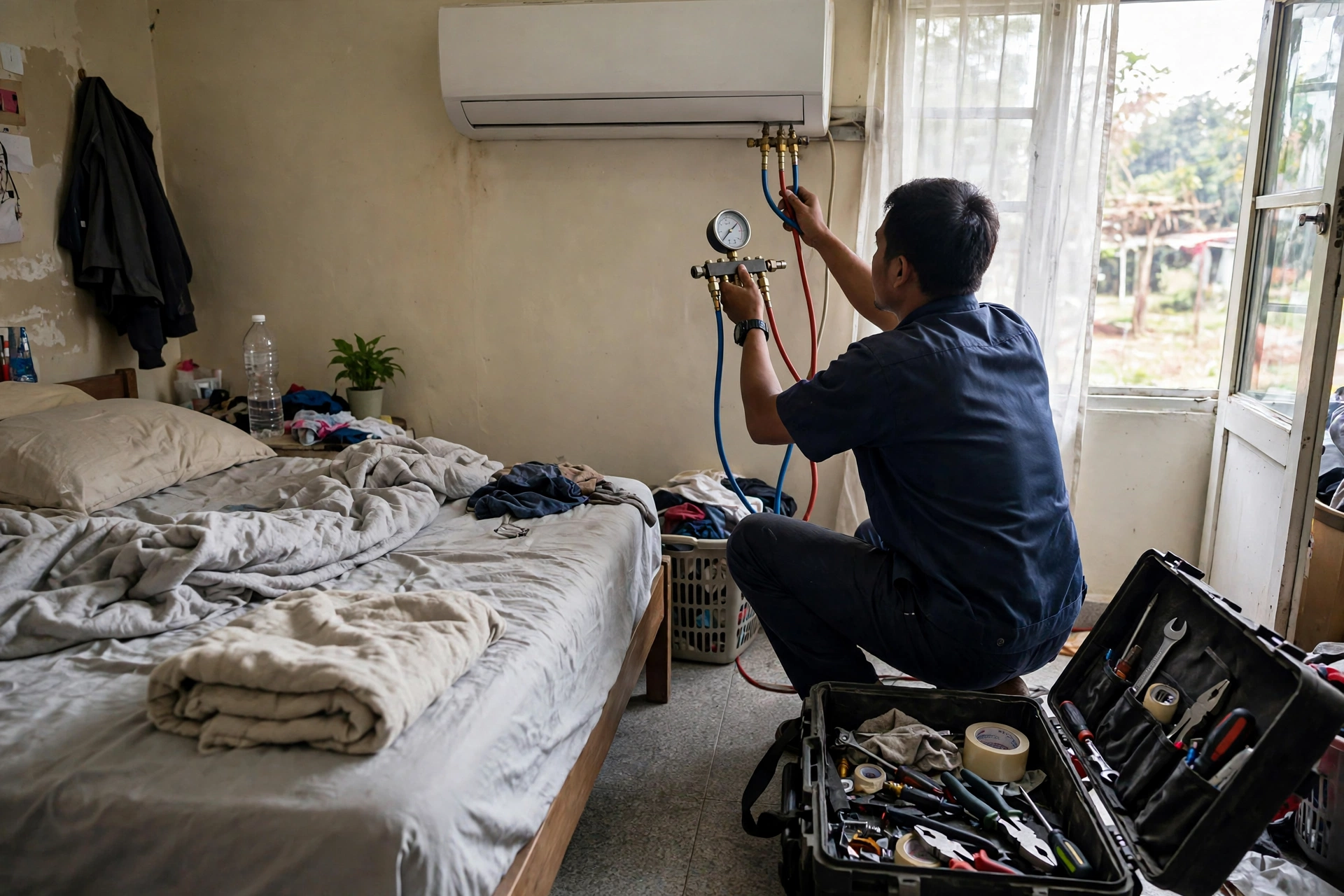
Most aircond repair jobs start with a small problem that grows over time. A dirty filter, a slow gas leak, or a tired sensor can turn a cool room into a warm one. This guide covers the most common aircond faults, their causes, and what you can safely check at home. You will also learn when to call a technician.
Aircond Repair Starts With the Right Diagnosis
A good repair starts with a clear diagnosis. Two units can show the same symptom for very different reasons. A unit that is not cooling might need a filter clean or have a gas leak. A noisy unit might have a loose panel or a worn fan motor. Working through the symptoms helps the technician fix the real cause on the first visit.
Aircond Not Cooling
Not cooling is the most common complaint we hear. Start simple: remote on cool mode (not fan or dry), set temperature below room temperature, clean filters. Dirty filters block airflow, and weak airflow means weak cooling. Wash the filters, let them dry fully, and put them back.
If clean filters do not fix it, low gas or a dirty outdoor coil is often the cause. Low gas usually means a leak in the pipes or joints. Keep clear space around the outdoor unit: leaves, dust, and boxes trap heat and cut cooling. If you see ice on the copper pipes, switch the unit off and call a technician. Running it like that can damage the compressor. Gas leak detection and repair costs RM150-400, and a gas refill for R22 or R410A costs RM150-280.
Water Leaking From Your Aircond
Dripping from an indoor unit is usually a drainage problem. Every aircond produces water as it cools, and that water leaves through a drain pipe. When the pipe blocks with dust and dirt, water backs up and drips indoors. A dirty filter makes it worse: poor airflow lets water collect where it should not.
Poor installation can also cause it: if the unit or drain pipe lacks the right slope, water cannot flow out. Low gas can also cause ice on the coil, which melts into a sudden leak. Switch off if water drips near power points or wiring, and never poke anything into the drain pipe — it can crack. Water leaking repair costs RM100-250 in most cases, including a drain clear, slope check, and test.
Strange Noises
Rattling often means a loose front panel or screw. Buzzing can come from a wearing electrical part or contactor. A high-pitched squeal usually means a fan motor or bearing problem.
Hissing needs more care: it can mean gas escaping from a pipe or joint. Switch the unit off and call a technician, and never try to tighten gas pipes yourself. Gurgling usually comes from the drain, and it clears with a proper drain clean during servicing.
Blinking Lights and Error Codes
When an aircond light blinks, the unit is flagging a fault. Many units blink in a pattern that points to a sensor problem, a fan fault, or a communication error between the indoor and outdoor units. Note the pattern, brand, and model before you call, so the technician brings the right parts.
You can try one safe reset: switch off at the remote and the power supply for a few minutes, then switch back on. If the blinking returns, leave it off and book a visit. Faults on sensors and control boards fall under minor repairs at RM80-200, while compressor and PCB jobs cost RM200-500+.
Compressor Problems
The compressor is the heart of the outdoor unit: it pumps gas around the system, and without it there is no cooling. Signs include an outdoor unit that hums but never starts, a tripping breaker, or warm air even with clean filters and correct settings.
Compressor faults are not always the compressor itself. A weak capacitor can stop it from starting, and low gas can make it overheat. A technician will test the capacitor, gas pressure, and power supply before deciding what needs replacing. Never open the outdoor unit yourself: it holds high voltage parts and pressurised gas.
Sensor and Thermostat Faults
Sensors tell the aircond the room temperature. When one fails or slips out of place, the unit gets the wrong reading: the room feels warm while the unit thinks it is cool, or it cuts in and out every few minutes. A faulty thermostat causes the same trouble.
Sensor faults are common in older units and in units not put back right after cleaning. The fix is usually simple: reseat or replace the sensor. If your aircond cools well sometimes and badly at others, mention that pattern when you book.
What You Can Safely Check Before You Call
These checks are safe for any owner:
- Remote: cool mode on, temperature below room temperature, fan on auto or high.
- Filters: remove, wash, dry fully, refit. Never run the unit with wet filters.
- Power: check plug, isolator switch, and breaker. Reset a tripped breaker once.
- Outdoor unit: clear leaves and boxes so air flows freely.
- Visible water: switch off and note where it comes from.
If the fault stays after these checks, it is time to book aircond repair. Regular servicing also prevents many of these faults. Our aircon maintenance schedule explains how often each type of unit should be serviced.
When to Call an Aircond Repair Technician
Call a technician right away for a burning smell, a breaker that keeps tripping, hissing pipes, water near wiring, a compressor that will not start, or a fault that returns right after a filter clean.
For homes and small offices, aircon repair usually covers all of the faults in this guide, from sensors to compressors. For larger or older systems, air conditioning repair may need parts ordered in advance, so a clear fault description when you book saves a second visit. If you need aircon repair KL wide, our team covers Kuala Lumpur and Selangor, and you can check typical costs on our price list before you book.
Book an Aircond Repair Visit
Tell us the symptom, your unit brand, and your area, and we will arrange a visit. Our team handles Daikin, Acson, Panasonic, Midea, and Mitsubishi units across Kuala Lumpur and Selangor. Message us on WhatsApp at https://wa.me/60105930730 or call +60 10-593 0730. We are open 24 hours.