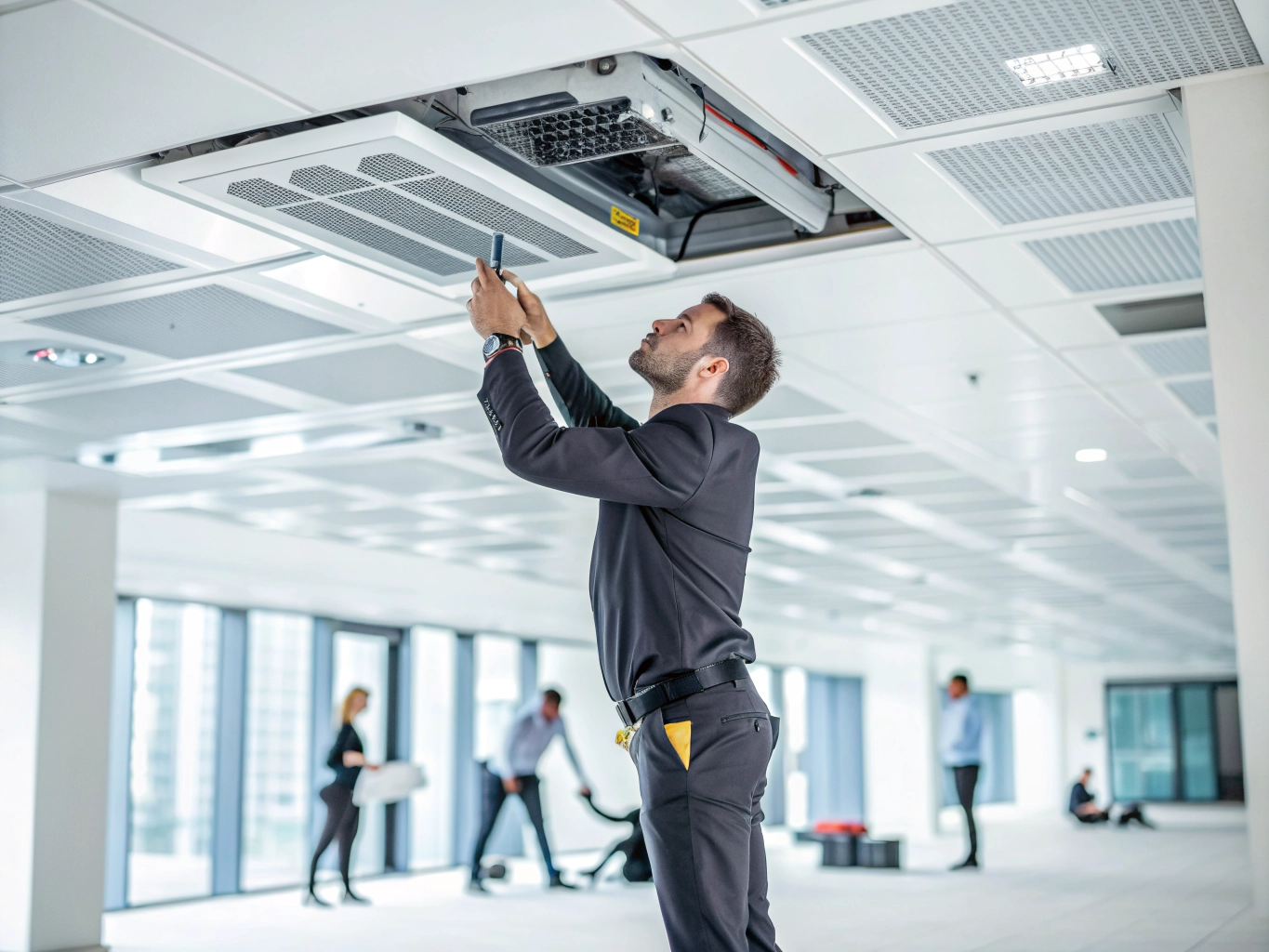
For offices, retail shops, restaurants, and commercial buildings, aircon isn’t just about comfort — it’s operational infrastructure. A breakdown during business hours means uncomfortable customers, disrupted staff, or in the case of server rooms and cold storage, potentially serious losses. This guide looks at why a scheduled maintenance contract makes more sense than reactive, one-off servicing for most businesses.
The Real Cost of Reactive Servicing
Many businesses only call for aircon service when something has already gone wrong — a unit stops cooling, a server room starts overheating, or customers start complaining about a warm dining area. The problem with this approach:
- Unplanned downtime during business hours, which is far more disruptive than a scheduled visit
- Higher repair costs, since issues caught late are usually worse than issues caught early
- No visibility into which units are due for attention until they fail
- Inconsistent record-keeping, making it hard to track a unit’s service history or plan replacement timing
A maintenance contract shifts this from reactive to proactive — problems get caught while they’re still small, inexpensive fixes.
What a Commercial Maintenance Contract Typically Covers
- Scheduled visits at an agreed frequency (monthly, quarterly, or bi-annual depending on usage intensity)
- Multi-unit servicing across the property in a single visit, reducing overall disruption
- Priority response for breakdowns between scheduled visits, since contracted clients are typically prioritised over one-off bookings
- Service history records, useful for budgeting, warranty claims, and planning eventual system replacement
- Consistent per-unit rates, usually more cost-effective than booking each unit separately over the course of a year
Which Businesses Benefit Most From a Contract?
Offices — With units running for long hours during business days, offices benefit from scheduled cleaning and maintenance that keeps energy costs predictable and avoids mid-meeting breakdowns.
F&B outlets and restaurants — Kitchen heat, grease, and high customer turnover make cooling systems work harder here than almost anywhere else. Regular maintenance, including grease-related cleaning, helps avoid the discomfort (and lost business) of a warm dining room during peak hours.
Retail shops and malls — Comfortable temperature directly affects how long customers stay and shop. A scheduled contract for ceiling cassette or VRV/VRF systems common in retail spaces helps maintain consistent comfort across the shop floor.
Server rooms and data-sensitive facilities — These spaces have the least tolerance for cooling failure. A missed maintenance cycle here carries far higher risk than in a typical office, making scheduled, frequent checks essential.
Factories and warehouses — Large-scale chilled water and AHU systems in industrial settings require specialised, consistent maintenance to avoid costly production downtime.
How Contract Frequency Is Usually Determined
Frequency depends on how intensively the systems are used and the environment they operate in:
- Standard offices: quarterly servicing is typically sufficient
- F&B and kitchens: every 2–3 months due to grease and heat exposure
- Server rooms: monthly to quarterly, depending on the facility’s own risk tolerance
- Industrial/warehouse HVAC: usually quarterly, though this can vary based on the specific equipment and production schedule
For a more detailed breakdown by usage type, see our maintenance schedule guide.
What to Look for in a Maintenance Provider
- Experience with your specific system type — commercial HVAC (VRV/VRF, chilled water, AHU) requires different expertise than standard residential units
- Transparent, fixed contract pricing — avoid vague terms that leave room for surprise charges
- Fast response guarantees for issues between scheduled visits
- Genuine parts and documented service records, useful for both performance and any future warranty or resale considerations
Frequently Asked Questions
Is a maintenance contract more expensive than paying per visit? Over a year, contracted rates are typically lower per visit than booking services individually, since providers usually offer better pricing for guaranteed, recurring business.
Can a maintenance contract cover multiple AC types in one property? Yes — most commercial properties have a mix of system types (wall-mounted in offices, cassette in retail areas, VRV/VRF for larger zones), and a single contract can cover servicing across all of them.
What happens if something breaks down between scheduled visits? Most maintenance contracts include priority response for unscheduled issues, meaning contracted clients are typically seen faster than new, one-off bookings.
How long is a typical commercial maintenance contract? Terms vary, but annual contracts with quarterly or bi-annual visits are common. Some providers also offer shorter-term arrangements depending on the property’s needs.
Do I need a different contract for server room cooling versus general office cooling? Not necessarily a separate contract, but the visit frequency and inspection detail for server rooms is usually more intensive than general office units, and this should be reflected in the service plan.
Set Up a Maintenance Contract for Your Business
Avoid unplanned downtime and keep your commercial cooling systems running reliably. Message us on WhatsApp to discuss a maintenance contract tailored to your property, call +60 10-593 0730, or explore our full range of services for commercial and industrial clients.